
Branch vs. Subsidiary: Key Tax Considerations for Foreign Companies in Iraq
For international businesses entering the Iraqi market, choosing between a foreign company branch and a locally incorporated subsidiary is an important legal, financial, and tax decision.
Although both structures may be subject to Iraqi corporate income tax, their legal characteristics and compliance implications differ.
Foreign Company Branch • Operates as an extension of the foreign parent company. • Is generally subject to Iraqi corporate income tax on taxable income arising in Iraq. • May face restrictions on the deductibility of certain head office expenses. • The foreign parent remains responsible for the branch’s legal and financial obligations.
Iraqi Subsidiary • Is incorporated as a separate Iraqi legal entity. • Is generally subject to Iraqi corporate income tax under the rules applicable to resident companies. • Maintains its own accounting records and tax compliance obligations. • Transactions with foreign shareholders and related parties require appropriate tax and accounting consideration.
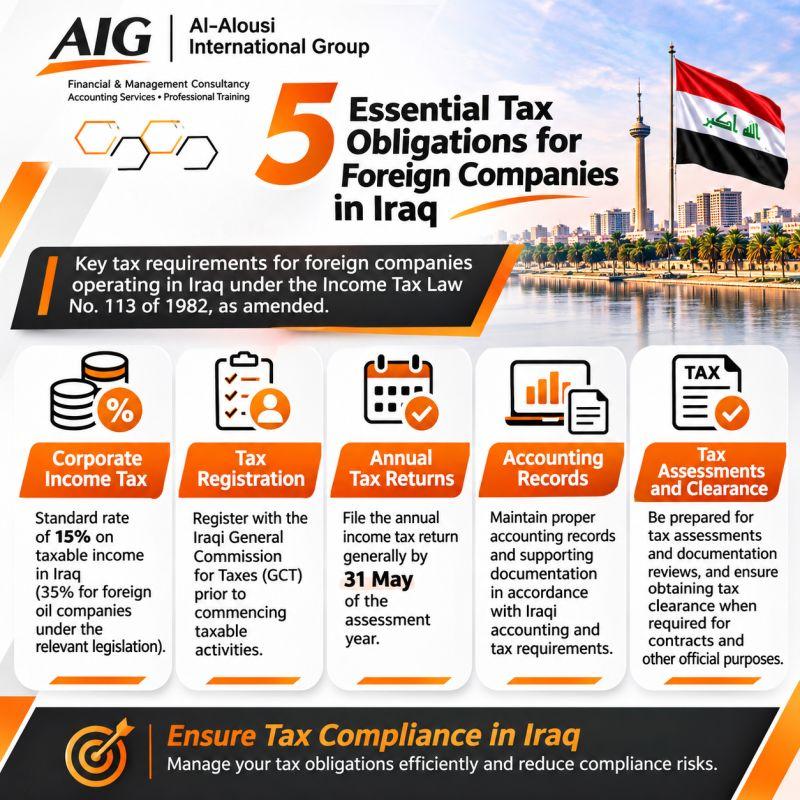
Corporate Income Tax The standard corporate income tax rate is generally 15% for both structures, subject to applicable sector-specific rules and exemptions.
Key Insight The appropriate structure should not be selected based on tax rates alone.
International businesses should also evaluate legal liability, contract requirements, accounting obligations, intercompany transactions, and long-term operational objectives.